A few months back, I was copied into an email correspondence between a friend and the host of a workshop she had just attended on Religion and Peace Building. It seemed that the research group that was hosting her event was putting on a similar workshop on Atheism and Literature in Barcelona, and my friend thought that I might be a great addition. Not only was I truly honoured to receive the invitation, but it served as yet another lasting testament to the truly wonderful character of this individual, ensuring that I, if nothing else, was made aware of this event. Then again, she has always shown herself to be that sort of genuine person. Even now, as she makes the transition from academia to the life of a postulant with the Congregation of Jesus (CJs) in London, she has offered to share her experiences so that we might get a special glimpse at the process.
I attended the workshop a week or so ago and had an incredible time. Everyone involved was engaging and interesting and the experience was truly wonderful. Here is a brief video of the event, in which I feature a little.
At dinner, and in and out of conversations in English, Spanish, and Catalan, I asked if there were any suggestions about things to do and see in and around Barcelona for the time I had left to explore. A number of suggestions were made, which I noted. I ended up seeing a few of these, but not all. At the top of the list, which I had added myself, was Gaudi’s Sagrada Familia. There were a few giggles, and ‘well of course’ glances. Someone said something in Spanish, which was translated into English as ‘tourist trap.’ I didn’t think that this was that surprising of a description. After all, to avoid standing in line (as suggested by the website) I purchased my entrance ticket online. To do so, however, I had to choose a specific day and time window of when I wanted to visit. The options were limited, so I chose 12:30-12:45.
The next morning I took the metro from my hotel. The L2 line to the Sagrada Familia stop. I joined a small crowd heading up the escalator and watched as almost every person ahead of me turned, as if in sequence, and began taking pictures as they entered the sunlight. I waited until we got to the top, stepped away from the crowds, and took this picture.
Later, and after waiting in a line filled with very anxious tourists (including myself), I eventually had my ticket scanned and was permitted into a second line. After a bit more waiting, and after I had unpacked the contents of my bag at a security desk, I made my way up the stairs and inside. There must have been some specific detail about the interior columns on the audio guides everyone was listening to (I opted to wander without a guide), because everyone, and I mean everyone, stopped and tapped, rubbed, or slapped the columns, just at the entrance. I later learned that Gaudi had designed the columns to mimic tree trunks. Why this inspired the tapping, rubbing, or slapping, I’m still not quite sure.
I took a few pictures, avoided the larger crowds and groups, failed to avoid being in the background of innumerable selfies, and eventually found a chair. I had about fifteen minutes to enjoy the interior until my scheduled appointment to ascend the tower on the nativity side of the church. As I sat there, cold and basquing in the surreal green, orange, and red light, I reflected on the oddity that is the tourist trap sacred space. After all, as we moved along in our line outside I couldn’t help but relate the anxiety I felt about ‘getting in’ to the almost unbearable excitement I used to feel every time we drove into Disneyland. It was almost as if the church itself had become a novelty, a destination that just had to be checked off a list, but only after stepping through the doors.
This got me thinking. Was this still a sacred space? Sure, a crucifix was hanging front and centre over an altar, and the Bose surround sound speakers attached to the tree trunk columns were playing organ music. Yet, people were on their cell phones. They were talking loudly, and laughing. A young boy sitting a few chairs away was playing Angry Birds. Even I was reading Hemingway’s The Sun Also Rises. When I was in Madrid and stood in front of Picasso’s Guernica, the atmosphere seemed a bit more reverent. People spoke in hushed tones and politely obliged the no photography rule. It was as if they were standing before some sacred object. Or, perhaps it was nothing more than my misinterpretation of museum etiquette. Then, what about the etiquette of this church?
Here’s my thesis for this post: when a sacred space becomes a tourist attraction, does it transmute into something less sacred, or does it take on a polysemous identity that encompasses both sacred and profane?
As I thought about this, a few caveats came to mind. First, is Sagrada Familia different in some way? With its design and connection to the culture of Barcelona and Catalonia, is it more than just a church? In other words, is it religious, religious art, or just art? Second, in comparison to the Barcelona Cathedral, does this distinction become more clear?
In my travels, I’ve often found myself a visitor of the tourist trap sacred space. It seems, when one spends this much time studying religion, these sorts of pilgrimages occur without much prompting. So this then got me thinking again: is my association of these cites as ‘attractions’ merely the product of my training? Because I view these places through the lens of a pragmatic objectivity, have I transmuted them for my own intentions?
I quite fondly remember the feeling of sincere apprehension and discomfort when I was required to not just attend a Sabbath service, but participate as well. Likewise, I can recall a number of occasions being the odd phenomenologist in the back of the group not willing to ‘take part’ whenever our classes would visit local churches, temples, or synagogues for ‘field analysis.’ Even worse, I remember the infuriating frustration of having to ‘actively engage’ a monastic lifestyle for a course on monasticism. Though I took it as the University of California, Riverside, it seems the instructor still gives this course elsewhere:
Needless to say, I happily broke every single rule. Dr. McDaniel and I made an agreement, though. Here we are enjoying a beer I made for the class, the only acceptable mendicant role I was comfortable playing.
To return to my thesis, beyond my own perceptions, do these sorts of sacred spaces become something extra-sacred when individuals like me, or individuals who perceive these cites as nothing more than mere attractions, transform them via their own specialised interests? Additionally, does this in any way infect those who use these cites for religious purposes?
When I walked the Via Dolorosa in Jerusalem I found myself amongst pilgrims leaning their bodies against the walls or kneeling with severe penitence at the Tomb of Christ, while at the same time tourists in khaki shorts and polo shirts followed cartoonish maps and sipped Coca-Cola through straws bought at market stalls with American currency.
I’ve sat in the back of the St. Giles Cathedral here in Edinburgh reading novels by Ian McEwan while secular choir groups practiced singing hymns alongside the organ. Likewise, I’ve attended festival events at the Cafe Hub just up the Royal Mile.
Perhaps out of all of these examples, the most interesting was taking a tour of the Mt. Carmel Centre in Waco, Texas. Though not much remains after the joint FBI and ATF siege that took place in April 1993, the land itself still maintains a sense of sacredness.
Is the tourist trap sacred space a sacred space? Yes and no, it seems. Then again, I’m not sure I’m the proper authority to answer that question. After all, I am just as guilty in transforming these spaces, and thus just as guilty in treating them as attractions; evinced by the fact that I felt the need to include the pictures I took, or that I took pictures in the first place. Then again, a keen reader might have noticed that I failed to include pictures of Picasso’s Guernica, perhaps my favourite painting in all the world. Or of the beautiful Reina Sofia Museum in general. ‘Of course,’ I might respond. I didn’t take pictures that day. It seemed inappropriate to do so.
Texas is huge. Of all the stereotypes, that is perhaps the most accurate. Actually, that’s not quite true. They’re all pretty accurate, depending on who you talk to, where you talk to them, what you talk about, and the current political climate, both in the US and worldwide.
I was asked recently, as I am often asked, how I ended up in Scotland. To answer that question I needed to first tell the story about Texas, or at least about my time in Texas. Without that story, the other one seems less fulfilled, less complete.
We ended up in Texas because my parents retired there, like many other people fleeing California’s waning economy, and we were curious why they would make such a horrible mistake. We flew to Austin one weekend and found ourselves loving the city. It was different, and ‘weird,’ and seemed like a fun change of venue from the California we had grown up in. I ended up at Baylor by writing an email to the then chair of the American Studies program requesting information about their Master’s program. He returned an email a few days later stating that he liked my interests and that, if I wished, I could begin in September.
The master’s program at Baylor, at least for the American Studies department, is equivalent to a ‘taught masters’ in the UK. Along with a short dissertation submitted for an oral defence in the Spring of your second year, you also take a number of required courses (up to a specific number of units, in specific areas). I attended lectures on American history and, most importantly, on Church-State relations. These latter courses were quite intriguing. I had not really familiarised myself at this point with the mysteries of Civil Religion, how the Supreme Court’s decisions shaped a particular discursive means of defining American religion, the role the President played in shaping that discourse, and how this all contributed to a larger sense of religion in the American context.
I finished that first degree in one year, and was asked if I might consider joining the J.M. Dawson Institute of Church State studies for a PhD. I quite excitedly agreed.
One of the main reasons I was asked to join their department was due to my interests in Atheism, a 1/3 aspect to the topic of my dissertation (the other two parts being Fundamentalism and New Religious Movements). Likewise, because I was a foreigner (not Texan), and because I was, for whatever reason, not shy about diving right into controversial subject matters, I was asked to be the ‘Devil’s Advocate‘ during seminars, the voice of opposition meant to challenge the opinions of the others involved. I was, of course, not always the only person in the room who disagreed with everyone else, but on the occasions that it did occur, it was quite fun. Additionally, I found that the other post-graduate students in the department were wonderful debaters, and our conversations and camaraderie is something I will cherish for all time. Eventually, however, the fun came to an end, and while my eventual demise at Baylor is it’s own story that will likely appear in here one day, it’s not something worth focusing on at this moment. For summary purposes, I’ll just say that I was not permitted to complete the doctorate. When I asked whether I might write up another dissertation and receive a second Master’s degree, permission was granted and so I did.
The tacos were terrible. I was told I wouldn’t be permitted to finish the PhD at a terrible Tex-Mex restaurant in a terrible part of Waco, Texas. Which is a terrible city. It was rumoured for some time that the department would be undergoing some changes, and this confirmed much that I had assumed would happen. It was refreshing in a way, finally knowing the truth. Equally, it gave me the opportunity to make decisions, to plan accordingly with full knowledge about my future. In all honesty, I had no idea what to do next. The terrible tacos add a sensory addition to this memory, a feeling of nausea and uncertainty that would not have made it as meaningful were it not for how bad they were.
I drove back to Austin (we would not have lived in Waco) and started thinking about options. I contacted a previous supervisor who made the ridiculous suggestion that I look at Universities in the UK. I had never thought of that. Moving to Texas was a big move. Moving to ‘Europe’ was even bigger. Where would we live? How would we live? How could we afford it? How different would our lives be? Would we return the same people who left? Would we return at all?
I applied and accepted an offer to the University of Edinburgh.
My topic would be Atheism. This was, in all honesty, a bit of a mistake. Then again, so was religious studies. I wanted to study Art History. Religious Studies happened because I took a class I really enjoyed and read Huston Smith’s The World’s Religions. It was like a novel, about real people, in real places, in real time, being religious. Then I got involved with some Ninian Smart phenomenologists and the deal was sealed.
The Atheism thing only happened because it was what I was studying at Baylor, and I felt just moving on from there would be easy. I wasn’t entirely correct. However, it did lead me into the world of Atheist and, dare I say, ‘non-religious’ studies. Which then led me to fiction, and a sort of return to my original plan: using aesthetic media (art, fiction, film) as a discursive source of Atheist identity construction. I’ll get into more detail about ‘Ethnographic Criticism’ in a few weeks.
This also led me to become a part of the discursive world in Britain on the study of Atheism/non-religion. This included conference presentations, roundtables, and blog writing. For example, for a while now I’ve been struggling to write a post for the Non Religion and Secularity Research Network’s blog, not because I didn’t know what to write, but because I was unsure about how to write it. Mostly, because of my criticism about the term, I didn’t want to take the opportunity they were offering me to exact some sort of ill-determined attack on them. Not only did that seem pointless, but petty. It all has something to do with the bizarre ownership I think we all feel about our subjects.
Instead, I took the opportunity to write about my own approach, about the way I have used to the term ‘Atheism,’ and how I might use my ‘Ethnographic Criticism.’
I don’t like definitions. In my experiences studying religion and Atheism I’ve come to dislike definitions. This is not some sort of post-modernist idea that nothing is defined or, even worse, that everything is fiction. Rather, my dislike of definitions stems from the inevitable and troubling notion that we need to define the terms and concepts we use in a general or abstract way. This is what I mean by ‘definitions.’
In my post for the NSRN I tried to explain this a bit more. In fact, the post itself is a miniaturised version of my Thesis, which is itself a culmination of my research at Baylor and the subsequent interests I have been studying here in Edinburgh. Within it I can trace the roots back to the origins of my interests all those years ago, and my writing it, as well as their posting it, seems like a sort of sub-Chapter break in my own story about Atheism.
For this, and other reasons, I implore those interested to not only read my post, but the others there as well. They are, I believe, not only an excellent source of the particular discourse we have created with our individual approaches, but are equally stories linked back to origins just as fictional as my own.
During our two years in Texas, the bumper sticker pictured above was one of the many sort of ‘stereotypical’ images we saw stuck on car bumpers or blown-up in large print along the highway. These were little reminders that Texas was a very different sort of place than the Southern California we had grown up in. In current retrospect, this is as equally true now that we’ve lived in Scotland for almost half a decade. Seeing similar images recently also reminded me of a long-forgotten story.
Years ago, when I was still in my undergrad days, I took a course taught by the Chaplain of the University I was attending who despised bumper stickers like this. They were not, as he would argue, just poorly worded propaganda, they were pragmatically one-sided as well. Quite appropriately, he referred to the statements made on them as ‘bumper sticker arguments,’ opinions or beliefs tightened up into a few words for the sole purpose of making a proclamation about the person who fastened them. These were not the sort of affirmations one makes in the company of colleagues or respected rivals. These were not arguments made with intellectual debate in mind. Rather, as he would tell us, these were the sorts of arguments that come from individuals who’s minds are already made up. People who attach these things to their cars were announcing something. These were the sorts of people who did not want to debate or discuss the content of the sticker, but would rather you know, simplistically, that this is what they believe.
Looking back, I would argue that this is only slightly true, mostly because while I agree that these sorts of statements do in fact represent the opinion of the individual who attaches them to their vehicle, I also believe they harbour a narrative quality as well. That is, not only are they a summarised position, a guide-post signifying for the reader what the attacher believes about something, they are equally a way to isolate for that latter person a conceptual part of their identity.
In recent months, and in a similar manner, there has been a great deal of discussion and debate about one of the films nominated for Best Picture at this year’s Academy Awards. Specifically, it seems the discussion has been about the validity, or even ‘truth,’ behind the story of Chris Kyle’s experiences in Iraq and the United States between 2003 and 2013. American Sniper tells the story of Kyle’s four tours in Iraq, touching briefly on his life leading up to his first deployment, his relationship with his wife, Taya, the reputation he gains as the most ‘lethal sniper in US history (160 confirmed kills out of 255 probable), as well as the hardships he suffers during his time in combat, and the emotional scars left after returning home. It concludes, with a somber and subdued tone, with images of his memorial at Cowboy’s Stadium in Dallas, Texas.
Based on an autobiography that Kyle co-authored with Scott McEwen and Jim DeFelice, the film depicts him as a haunted, yet determined ‘American patriot,’ portrayed quite remarkably by Bradley Cooper, who has equally been nominated for the Best Actor Oscar. Directed by Clint Eastwood, the film takes a number of liberties from Kyle’s story so as to create a narrative not only told in distinct parts, but that clearly determines a dichotomy between protagonist and antagonist. In the latter, a character called ‘Mustafa’ is entirely conjured in order to depict Kyle’s mirrored counterpart; an equally lethal sniper that haunts (and hunts) Kyle throughout his time in Iraq.
For these reasons, we might even argue that the film is a story of a story, an adaptation of an individual’s own adaptation of events based upon his own recollections. This is, perhaps, where much of the controversy about this film seems to arise. That is, since Kyle’s murder in 2013, and because films tend to transmute ‘true stories’ into mythologized tales, the facts tend to become somewhat blurred. For instance, and what seem to be the focus of much of the debate about him, there are three specific stories that seem to have invoked the most criticism:
Kyle shot and killed two men attempting to steal his truck in 2009 and was excused of all charges (a police report was not even filed) because of an intervention by the Department of Defence.
Kyle shot and killed ‘at least 30’ armed looters from the top of the Super Dome in New Orleans shortly after Hurricane Katrina.
After a verbal altercation in a bar in San Diego, Kyle punched and ‘knocked out’ former Minnesotta Governor, and fellow Navy Seal, Jesse Ventura.
For more detail on these stories, see the article on Kyle on Snopes.com, and the well-written piece for the New Yorker, “In the Crosshairs,” by Nicholas Schmidle. Or, at this point, and thanks to the film’s popularity, simply google Kyle’s name. Something will come up.
While this controversy is indeed something worth discussing, and while Kyle’s life is indeed an interesting story, it is not the focus of this post. Rather, my intentions herein are about the narrative of Kyle’s story, and how we so easily seem to shift these sorts of stories into concepts, overlooking, or even pragmatically ignoring, facts for the sake of legend.
Kyle’s story, or at least the one re-imagined in Eastwood’s film, works as a narrative concept for individuals on both sides of the discussion. On one end, he depicts a national hero, a patriot who willingly gave his life for his country, protected his fellow troops, defeated the enemy at all costs, and who died trying to assist his fellow soldiers suffering from the physical and emotional scars left by the tragedy of war. On the other, he is an example of violence begetting violence, a man obsessed with proving his masculinity, who equally depicts the religious zealotry exemplified by the war in Iraq. But again, I would argue that separating his character into these two depictions once again overlooks the fact that his story is merely a narrative interpretation, one narrative interpretation, of a single point in history. Whether it is true or false, it is a narrative, a story built with and from discourse. Even when mythologized, even when we find ourselves leaning in either direction between promotion and criticism, his story is just a story. His narrative is just a narrative. It is, in each of these interpretations, a conceptual representation, both bumper-stickered and debatable.
Perhaps a better way of making this argument comes from another of Clint Eastwood’s films about war. The leading narrative in Flags of Our Fatherstells the story about how the iconic image of six US soldiers raising a flag on Mt. Suribachi on the island of Iwo Jima was in fact a construction, or if nothing else, a mythologized image used for the advantage of boosting stateside morale. A fiction in the sense that it depicts a second raising, the film chronicles how the image was used by the US Government and promoted by three of the surviving soldiers captured within. No more than three minutes into the film Col. Dave Severance (played by Harve Presnell) makes the following statement:
What we see and do in war, the cruelty, is unbelievable. But somehow we gotta make some sense of it. To do that, we need an easy-to-understand truth. And damn few words. And if you can get a picture … now, the right picture can win or lose a war.
Whether or not there is any sort of truth to the myth, whether the facts depict a truth that we might quantify in any sort of ‘real’ sense, we need narratives. Even if they present material that for some of us is outrageously fictional, narratives are just as essential to the individuals who use them to define themselves, as they are for us in our own means of self-definition via the ways we interpret them.
In this way, when we see ‘bumper sticker arguments,’ perhaps the better response is not an immediate reaction, such as the Chaplain above seemed to have promoted. Rather, when we see these sorts of images, perhaps we might be better off simply understanding that they represent a narrative, a means with which certain individuals define themselves, either for or against the statements made. Whether we want to simply believe them as true, research the facts within, or work to disprove them, they will always be stories. After all, Chris Kyle now lives solely in legend, but only because he now exists solely as a character within a story; a fate that awaits us all in time. For pragmatic reasons, then, the stories others tell, the stories we tell about them, and the stories we tell of ourselves, work as identifiers, assisting us in making sense of life in our determined search for meaningful fictions.
Though perhaps not as many as others I know, I have presented at a good number of conferences. One thing that I have learned throughout the process is the utility in using these experiences to better shape my research narrative.
Like a story in itself, the thing that we research often becomes something told and retold on so many occasions that it transforms into a part of our personal discourse. That is, our research topic transmutes into something that describes us, and vice versa. It becomes a part of our identity. This is, partly, why my twitter handle is twitter.com/AtheismGuy. Moreover, at the early stage, when we are focused so myopically on the PhD Thesis, this is ever more prevalent as we begin to try and describe (and in the process come to realise) what it is that we are actually researching in the first place. This is perhaps best reflected by a friendly exchange that recently took place between myself and two other individuals who are studying Atheism/Non-Religion.
The three of us met at a cafe in Edinburgh to discuss the possibility of shaping together a roundtable discussion for our Atheism in Debate course here at New College, which we each tutor on. I wrote briefly about the course in a previous post. The locus of the idea came from Liam Fraser, who’s research on Atheism and Fundamentalism argues “that these apparently irreconcilable movements share a common intellectual structure, and derive from a common theological and philosophical source.” Very interesting stuff. The other in our group was Christopher Cotter, who I’ve mentioned previously, and who’s research at Lancaster University on the discourses that underly the social constructions of notions about Non-Religion and the ‘secular’ is definitely worth a read.
While Chris and I have known each other for a few years now, this was our first introduction to Liam, so our conversation, as so often happens when three individuals who study similar things meet for the first time, was focused as well on what Liam so aptly called our ‘elevator pitch.’ I’ve heard this phrased a number of different ways, perhaps the most popular of which is the ‘three-minute thesis,’ which is also the name of a world-wide competition that began in Australia. In essence, the ‘three-minute thesis’ is as the title suggests, or as the website states: the reduction of an 80,000 word thesis into a three minute presentation. It isn’t really that easy, despite the ease with which some are able to do it. See, for example, this last year’s winner Megan Rossi:
Regrettably, I have never really tried to reduce my thesis in this manner. So when Liam asked for my ‘elevator pitch’ he, perhaps begrudgingly, received a fairly long and detailed account of how I intend to change the academic world with my substantial and original ideas. As I was detailing all of this to him (and Chris, who got to hear it all over again) I began to consider how this pitch not only describes what it is that I’ve done these last four years, but me as well.
This thought returned recently as I sat down to write up another conference presentation, which I will expand on a bit more later this month. In the process, I came to realise that there exists an odd feeling of ownership to these subjects, a bizarre association with ‘Atheism’ and my name, or the way I feel as if I have some sort of hold on the notion of Atheism and fiction and Ian McEwan’s novels, the latter of which always seems to surface when I meet someone who’s read one of his books and we carry on in a special conversation only we understand. It’s like having an exclusionary knowledge about a subject, being ‘in the know,’ or privileged in some odd way.
Whenever I find myself thinking this way I am reminded of a line Malinowski noted in his diary during his observations in New Guinea for Argonauts of the Western Pacific.
Joy: I hear the “Kiriwina” [another name for the Trobriands; more strictly the northern province of Boyowa]. I get ready; little gray, pinkish huts. Photos. Feeling of ownership: It is I who will describe them or create them.[1]
Though he never, as far as we might assume, intended to publish these personal thoughts, and though their publication made way for the Writing Culture debate that would follow in the next two to three decades, I would argue that Malinowski’s own feeling of ownership is not all that surprising. In fact, because he saw himself as the translator of Trobriand culture for the Western World, his sense that he ‘owned’ it is as equally reflective of his idea that this would be his subject. He would introduce it to the world. He would translate their ‘imponderabilia,’ the nuanced and specific day-to-day that only one who has lived amongst his subject might be able to understand. He would create them.
Beyond the conversation we might have about how an observer’s textual representation (or even interpretation) might in any way equal anything akin to ‘creating a culture’ (which will come up eventually, I assure you), this might better explain what i mean by a ‘feeling of ownership.’ When we undertake these sorts of research projects, we not only immerse ourselves fully into the subject, the subject begins to infect us as well. There becomes a blurring of sorts, a consolidation of subject and object. This might explain why, on occasion, and especially depending on the subject of one’s research, we often get confused with what we do. This appears infrequently in religious studies. On a number of occasions I have been asked by friends and family if my intention is to become a ‘minister,’ or if I ‘actually believe’ what it is I study. Likewise, this might explain the jealousy we feel when we discover someone who studies what we study, but with (horrifically) a different perspective.
While this sort of thinking resurfaces from time to time, it is not something that I would argue is entirely an inaccurate assumption. We are our subjects, because our subjects shape our research narrative. They play an integral role in not only shaping the story we intend to tell, but the story of that story as well. In this way, when we reduce our research into an ‘elevator pitch’ in order to easily describe it, we are likewise finding a way to describe ourselves. Of course, and again, I do not have an elevator pitch. Rather, I have a blog. This is my elevator pitch. However, the elevator is very slow, and this building has a whole lot of stories.
So, as I once again cobble together a presentation on Atheism, Atheist Narrative, Fiction as Ethnography, Atheism in McEwan’s Fiction, and Discourse Analysis and the Definition of Atheism, I am once again reminded that, for no other reason than the obsession it takes to fully baptise oneself in a subject, when I give this presentation I will be the one who owns it. I will be the one to describe and create it. Of course, that does not mean that it is entirely mine. This is just a story I tell myself, a feeling of ownership I pretend exists, to keep me from feeling like what I have to say means something beyond the boundaries of my own thoughts.
[1] Bronislaw Malinowski, A Diary in the Strict Sense of the Term, Norbert Guterman, trans. (Stanford: Stanford University Press, 1967), 140.
In 1992 the Fantoft Stavkirk in the borough of Fana in Bergen, Norway burned to the ground. Originally erected in the mid-12th century in Eastern Sognefjord, and then transported in the 19th century to its present location, it was the first in a string of church burnings to take place in the early 1990s.
A stavkirk, or ‘stave church,’ gets its name from a type of medieval construction that consists of a timber-framed post and lintel design. Once found throughout northern Europe, the majority of those still in existence are only found in Norway. The term ‘stav’ refers to the load-bearing posts that hold the structure in place.
Though rebuilt, the Fantoft Stavekirk still shows signs of its destruction, particularly the chain link fence that surrounds the structure and the warning signs about alarm systems and closed-circuit recordings.
In 1994 Varg Vikernes (born Kristian Vikernes) was convicted for burning, or attempting to burn, the Åsane and Storetveit Churches in Bergen, the Skjold Church in Vindafjord, and the Holmenkollen Chapel in Oslo. He was also sentenced for the murder of Øystein ‘Euronymous’ Aarseth. He was found not guilty of burning the Fantoft Stave Church, but has been connected to the arson both for his support of the act, as well as for the image of the burnt structure used as the cover of his album, ‘Aske’ (‘ashes’ in Norwegian).
Accusations of Satanism as the reason for these burnings have been generally established. This derives heavily from the type of ‘Theistic Satanism’ espoused by the members of the early Norwegian black metal scene, such as that promoted by bands such as ‘Mayhem,’ ‘Emperor,’ ‘Thorns,’ and Vikernes’ ‘Burzum.’ Also known as the ‘Black Circle,’ this group of individuals established an ideological discourse of misanthropy, an inverse Christianity that focused more on promoting ‘evil,’ rather than on any sort of Satanic philosophy.
Admittedly, this discourse is not something I know all that much about. In fact, for anyone interested in this topic, I would highly recommend these sources:
The work of Asbjørn Dyrendal in the Department of Philosophy and Religious Studies at the Norwegian University of Science and Technology in Trondheim.
The doctoral work of Cimminnee Holt at Concordia University, Montreal.
The work of Jesper Aagaard Petersen in the Programme for Teacher Education at the Norwegian University of Science and Technology in Trondheim.
The work of Titus Hjelm at the University College London’s School of Slavonic and East European Studies.
The 2008 film ‘Until the Light Takes Us,’ which chronicles the black metal movement’s ideologies.
As well, it is not the focus of this post. Rather, my interests herein have to do with a comment made in passing with a friend about the Stave Church and the fact that it was burned by a ‘Satanist.’ When discussing the burning and the black metal scene in Norway, this individual, knowing I research Atheist discourses, and perhaps feeling it might be interpreted as a compliment to Atheism, stated: ‘Hey, at least he was a Satanist, not an Atheist.’
While there is much to be said about the accuracy of this casual assurance, regardless of the intricate discursive details that could support or refute its simple categorisation, it reminded me of a theory I put forth a few years ago in a paper presented in a seminar at Baylor University in Waco, Texas.
As occurred on occasion during this time, and a bit over the years since, I have found myself unwittingly defending Atheism against accusations of seemingly bizarre connections. One of these, which does not happen often, but still with enough occurrence that it warrants a bit of a chuckle, is the idea that Atheists believe in/worship/support Satan/Satanism. In their defence, these individuals’ ideas are likely the result of discursively combining what they deem as ‘evil’ into a singular abstraction. For them, Atheists have denied God, and are thus evil, just as Satanists have taken up with God’s opposite, and are thus equally evil. Regardless of the fact that an individual who denies the existence of God might still believe that God’s opposite might then still exist is a bit logically absurd, this sort of thinking is more about categorising an individual as an opposite of oneself, rather than constructing any sort of accurate description.
This got me thinking, partly because I was asked to be the contrarian in the room for these seminars, the voice of opposition or devil’s advocate that might inspire more passionate discussion. Is there a connection between Satanism and Atheism, beyond the shared similarity of ‘evilness’ in the eyes of certain individuals? That is, is there a connection beyond this sort of generalised stereotype? So, I looked at two origins of each term: the first derived from a particular means of defining a particular discursive example of Atheism, and the second from the context of its usage in both the Hebrew and Christian Bibles.
Atheism
As I’ve written about previously, the concept ‘Atheism’ is one that is not easily determined, regardless of the fact that we might perceive it as such due to the inherent nature of it being the ‘belief (or absence of belief) in the existence of God.’ In fact, the history of its definition is one of abstraction and creativity, demarcated by historical representations and theoretical stipulations. What this equates to is a discourse that is not altogether cohesive. Which is neither a bad thing, nor is it in any way detrimental. That is, of course, as long as we are not set on defining the term in a manner that might be representative of any and all types, uses, and iterations. If this is our goal, then this becomes quite an issue. Which might explain why we have so many additions to the latter, theoretical, category.
Instead, if we focus our attention on the historical definitions, that is, the definitions of the term based on real people in real places and at real times, either called ‘Atheist’ or who identify as such, then we turn toward discursive interpretations. These are ‘definitions’ that are neither ‘right’ nor ‘wrong.’ Instead, they simply exist as examples, as contributions to a larger discourse about what we mean when we talk about Atheism.
Within this category we find examples of what has been demarcated as ‘ancient Atheism,’ labeled as such in regard to the way it differs from ‘modern Atheism.’ While this is a discussion that will likely re-occur throughout this particular discourse on the subject, to summarise, this differentiation is made by two specific actions: imputation and self-description. In cases of the former, Atheism is a term used to describe an other, particularly an other who, through his beliefs and arguments, has acted against the status quo of the state. These individuals are deemed ἄθεος. In etymological terms, they are ‘without god.’ Now, this takes on a number of different types of ‘absence,’ from Socrates’ corruption charge for turning the youth of Athens away from worshipping certain gods, to Milesian philosophers like Prodicus of Keos who used philosophical logic to argue that the gods were in fact, as Euripides’ Sisyphus also argues, created by man to make sense of one’s day-to-day needs.
One of the underlying themes of this ‘ancient Atheism’ is a sense of doubt. This doubt, likewise based on the individual expressing it, fluctuates from mere hesitation in believing something outright, to more direct rejection or disbelief. We see this evinced by philosophical arguments that we might, from a modern perspective, deem ‘Atheistic.’ For example, consider Anaxagoras’ argument that the sun, rather than the god Helios moving across the sky, is in fact just a molten ball of iron. Or the naturalistic arguments of Thales, Anaximander, and Anaximenes who defended the idea that nature and the natural world could be understood without an allegiance to mythology. These are unique types of doubt, reflective of individuals who questioned the prevailing or popular beliefs of their time.
As discursive examples of ἄθεος these illustrations of doubt lead us to the notion that Satan, as a concept itself, embodies a particular type of Atheism.
Satan
In its Biblical manifestations the notion of ‘Satan’ is, in many ways, as difficult to clarify as Atheism. For summary purposes here, we might distinguish different discursive examples, designed and determined by the way the term is used. This, we might even further resolve, is divisible between ‘Satan-as-concept’ and ‘Satan-as-character.’
Beginning with Numbers 22:32, the term ‘Satan’ (שָׂטָן) meant ‘opponent’ or ‘adversary:
The angel of the Lord asked him, ‘Why have you beaten your donkey these three times? I have come here to oppose you because your path is a reckless one before me.
This continues in 1 Samuel 29:4, in reference to David amongst the Philistines:
But the Philistine commanders were angry with him and said, ‘Send the man back, that he may return to the place you assigned him. He must not go with us into battle, or he will turn against us (opponent, שָׂטָן) during the fighting.
Again, this notion of ‘Satan’ as ‘adversary is repeated in 2 Samuel 19:35 (“This day you have become my adversaries!”); 1 Kings 5:4 (“But now the Lord my God has given me rest on every side, and there is no adversary or disaster.”); 1 Kings 11:15 (“Then the Lord raised up against Solomon an adversary”); and 1 Kings 11:23 and 11:25.
While these examples represent an adversarial or oppositional position, in the Book of Job, the term is not only embodied by an individual (Satan-as-character), it is also imbued with the overall sense of doubt that becomes commonplace with the concept itself. In this manifestation שָׂטָן becomes a necessary entity for God, a position of Devil’s advocate, without whom God would not be able to prove the fealty of His creation.
One day the angels came to present themselves before the Lord, and Satan also came with them. The Lord said to Satan, ‘Where have you come from?’
Satan answered the Lord, ‘From roaming throughout the earth, going back and forth on it.’
Then the Lord said to Satan, ‘Have you considered my servant Job? There is no one on earth like him; he is blameless and upright, a man who fears God and shuns evil.’
‘Does Job fear God for nothing?’ Satan replied. ‘Have you not put a hedge around him and his household and everything he has? You have blessed the work of his hands, so that his flocks and herds are spread throughout the land. But now stretch out your hand and strike everything he has, and he will surely curse you to your face.’
The Lord said to Satan, ‘Very well, then, everything he has is in your power, but on the man himself do not lay a finger.’
Then Satan went out from the presence of the Lord. (Job 1:6-12)
Once again, ‘Satan,’ though embodied as an angel (son of God) presenting himself before God, is the representation of an adversary, an individual who, when presented with certain facts, responds with doubtful criticism. This occurs, almost in an exact manner, in Job’s second test:
On another day the angels came to present themselves before the Lord, and Satan also came with them to present himself before him. And the Lord said to Satan, ‘Where have you come from?’
Satan answered the Lord, ‘From roaming throughout the earth, going back and forth on it.’
Then the Lord said to Satan, ‘Have you considered my servant Job? There is no one on earth like him; he is blameless and upright, a man who fears God and shuns evil. And he still maintains his integrity, though you incited me against him to ruin him without any reason.’
‘Skin for skin!’ Satan replied. ‘A man will give all he has for his own life.But now stretch out your hand and strike his flesh and bones, and he will surely curse you to your face.’
The Lord said to Satan, ‘Very well, then, he is in your hands; but you must spare his life.’
So Satan went out from the presence of the Lord and afflicted Job with painful sores from the soles of his feet to the crown of his head. (Job 2: 1-7)
In the Gospel narratives, this doubtful characteristic becomes something more personal and direct, a character (known here also as ‘Devil’ or ‘διὰβολος’) who exists in order to once again present a pragmatic challenge, the resolution of which assists in directing the narrative itself toward a certain conclusion.
In Matthew 4:1-11, Mark 1:12-13, and Luke 4:1-13 Satan (σατανᾶ) directly tempts Jesus in the desert, a necessary evil in order to further determine Jesus as the Christ, an act of identity formation wherein a certain individual is defined by his interaction with an opposition.
Later, this same sort of oppositional necessity is depicted by Luke 22:3 and John 13:27 in the act of Satan ‘entering’ Judas, thus causing his betrayal. In this way, Satan acts as a conceptual entity, the notion of Judas here enacting a necessary deed in order to fulfil the prophecy of Christ as a sacrificial lamb. Though this appears as the ‘work of Satan,’ we might also see it as the work of doubt or opposition.
As a narrative device, the notion of ‘Satan,’ a title that functions as a pun, creates a dichotomous relationship between certain characters. Almost mimetic of metaphorical or allegorical character development within a milieu prepared and designed for such formational interactions, the idea of Satan is one of narrative utility.
Conclusion
In combining the lexical process of being deemed an ἄθεος (scepticism, doubt, critical debate) with the doubt, opposition, and adversarial nature of Satan (שָׂטָן; διὰβολος) we might confortably conclude here that Satan is, in fact, a representative sort of Atheism. Which brings us back to the Fantoft Stave Church, its demise at the hands of ‘Satanists,’ and my friend’s assurance that ‘at least he was a Satanist, not an Atheist.’ In this sense, my friend was in fact incorrect. Etymologically speaking, or even conceptually speaking, Satan is an Atheistic character, designed for the sole purpose of driving along the narrative toward a particular conclusion. Satan is, in this manifestation, not only an Atheist, but a necessity as well.
My theory, then, might be summarised as such: as a discursive concept, and when interpreted from within the context in which it was established, the notion of ‘Satan’ shares enough of the characteristics that we might find in certain discursive manifestations of Atheism. In this way, Satan was an early Atheist. Does this make any sort of modern Satanist an Atheist? No. After all, discourses are plastic things, and they change and alter over time. Just as ‘Atheist’ has come to mean a number of different things to a number of different people over the millennia, Satan has as well. Of course, I might argue on the side of the illogically absurd notion that since these two concepts, when isolated within the borders of certain Western monotheistic milieux, originated from similar sources, and are thus inextricably linked to a distinct genesis. Then again, that might just be me playing devil’s advocate again.
Sources
Jan M. Bremmer, “Atheism in Antiquity” in Michael Martin, ed. The Cambridge Companion to Atheism (Cambridge: Cambridge University Press, 2009).
Michael J. Buckley, “Introduction” in Michael J. Buckley, At the Origins of Modern Atheism (New Haven: Yale University Press, 1990).
A.B. Drachmann, Atheism in Pagan Antiquity (Chicago: Ares Publishing, 1922).
David Ferguson, “Atheism in Historical Perspective,” in David Ferguson, Faith and Its Critics (Oxford: Oxford University Press, 2009).
Donald E. Hartley, ‘HEB 11:6—A Reassessment of the Translation ‘God Exists’ (Trinity Journal, 27, 2, 2006).
Charles H. Kahn, “Greek Religion and Philosophy in the Sisyphus Fragment” (Phronesis. Vol. 42, No. 3, 1997).
John Navone, “Satan Returns,” (The Furrow, Vol. 26, No. 9, 1975).
Elaine Pagels, “The Social History of Satan, the “Intimate Enemy”: A Preliminary Sketch,” (The Harvard Theological Review, Vol.84, No. 2 Apr., 1991).
Elaine Pagels, The Origin of Satan (New York: Vintage Books, 1996).
J.P. Reid and B. Mondin, eds., “Atheism” in The New Catholic Encyclopedia (Washington D.C.: The Catholic University of America, 2003).
T.J. Wray and Gregory Mobley, The Birth of Satan: Tracing the Devil’s Biblical Roots (New York: Palgrave Macmillan, 2005)
This week we begin a new semester of tutoring, and for the third time I have the privilege to tutor on a course at New College called ‘Atheism in Debate: Dawkins and his Allies.’ While the last two versions of this course have found progressive successes, not only in bringing in students, but also in how the content is presented, there have been, as might be expected, a few complaints.[1] However, overall it would seem a marginal success.
Of all the discussion points that resurface each year, one has perhaps been brought up more often than any others: the question of comparison. How, we are often asked, are the New Atheists similar to the ‘old’ ones? Or, said otherwise, how is New Atheism in any way ‘new?’ These are indeed precarious questions. After all, when we look at the larger discourse that feeds into the definition of Atheism, we might argue that, in fact, New Atheism is not all that new. Rather, and as our course tends to conclude, New Atheism is merely the repetition of many of the facets of ‘old’ Atheism.
For instance, one might consider the philosophical positions of those who contribute to the discourse that forms this ‘old’ Atheism, such as Voltaire, Hume, Strauss, Marx, Feuerbach, Hegel, or Nietzsche, in comparison to the critiques made by the New Atheists. Many of these same thoughts are, presumably, ‘recycled.’
However, I might offer a discursive defence of New Atheism here. Yes, we might see similarities between these two Atheisms, or even almost identical critiques in Harris’ The End of Faith or Dawkins’ The God Delusion. Yet, I would argue this sort of criticism overlooks the much larger distinction of contextualization, so that, even though the criticisms made by these ‘New Atheists’ seem like recycled arguments from the ‘old Atheists,’ they are still being made in completely different contextual milieux. The time in which Strauss was writing his Life of Jesus, or Voltaire his Candide is not the same as the context that birthed Dennett’s Breaking the Spell or Hitchens’ God is not Great. That is, while I would agree that through comparison we might not find anything inherently ‘new’ about New Atheism, I would also concede that it arose out of an entirely different time and place, and thus offers us, if nothing else, an insight into that context so that we might locate why and how these particular critiques took shape.
In this way, the New Atheism is a discursive product. The language used is that of particular individuals in a particular time, and in particular places. For me, then, trying to compare or contrast the ‘old’ and the ‘new’ fundamentally overlooks the fact that comparisons are not necessary, and, what’s worse, can become abstractions, distracting us from finding value in each of these ‘types’ of Atheism as discursive or cultural data. Yet, New Atheism as a title still persists. Is that a wholly negative issue? Yes and no. On one end, giving even a nominal distinction to this discursive sample engenders a dichotomous perspective, demanding a comparison, and leading us back to those same abstractions where we might find ourselves lost amongst an apologetical argument that one is more ‘genuine’ or ‘original’ than the other. On the other end, we have the issue of too slack a distinction.
In this way, we might find ourselves, such as occurs in the larger discussion of the definitions of Atheism or ‘religion,’ with having to contend with the differentiation between ‘nominal’ and ‘virtual’ terminology: the former denoting a word that can be used in any number of iterations, and the latter denoting a use of that word in a more unique or specific way (see Jenkins 2008). This also brings us into discussions about the differences between real or essential definitions (terms that act to summarise the ‘essence’ of a thing) and lexical or historical ones (terms that have particular meaning to particular individuals at particular times [see Baird 1991]). While these are worthwhile discussions, and are quite pertinent to the issue at hand, this is neither the time nor place to truly devote our attention to such issues. Rather, I will from here on adopt a perspective that might be deemed more on the side of the virtual or lexical, and try to make some sense out of the persistent question concerning the ‘newness’ of New Atheism within the context of it as a discursive source.
Assholes: A Theory
The erudite and somewhat famous theorist of religion, Ninian Smart, was said to have a method of teaching that perfectly exemplified his notion of epoche. A practice employed by researchers and lecturers, ‘epoche’ essentially means the suspension of one’s disbelief, a pragmatic mindset utilised in order to remove the individual from either interpreting or presenting the concept religion with any sort of confessional bias. For Smart, this did not mean the complete abandonment of one’s personal beliefs, but rather was a means with which the researcher/lecturer might objectively approach a subject like religion without muddling the data with subjective opinions.
After all, we might remark, studying something is not the same as advocating it, just as studying that same thing is not the same as being without an opinion about it. It’s a fine line, indeed, but in the pursuit of objectivity it’s always useful to recognise and acknowledge the utility of these sorts of distinctions.
As the stories go, Smart would stand on one side of the lectern (let’s say the right) when lecturing, giving ‘just the facts.’ When asked, or when he felt inclined to do so, he would switch to the other side (the left) and give his opinion. This bipolarity would, one might imagine, be quite entertaining, especially when dealing with religious beliefs and practices that might seem ‘taboo’ or ‘provocative’ to a particular audience. For my intentions herein, this little anecdote is quite useful. While I (on the right side) approach Atheism as a discursive term, something that is imbued with meaning through the use of particular language by particular people in particular times and places, and thus approach it with a strict objectivity, that doesn’t mean that on the left side I do not have an opinion of my own. However, I also might acknowledge that a strict binary between these sides is not always the most useful. Thus, the following theoretical approach might be best understood as a sort of ‘tacking,’ a ‘back-and-forth’ approach that demonstrates both a right and left side perspective.
For me, what makes New Atheism new is that the New Atheists are assholes.
In his, Assholes: A Theory, the political philosopher Aaron James defines an asshole as someone not only immune to his or her own criticisms, but who, when criticised with the same sort of language, feels that he or she is, in fact, an unprovoked victim. In summary, his brief definition states:
Our theory is simply this: a person counts as an asshole when, and only when, he systematically allows himself to enjoy special advantages in interpersonal relations out of an entrenched sense of entitlement that immunises him against the complaints of other people. (4-5)
More focused on a few ‘stereotypical’ examples, such as demonstrated by individuals like US General Stanley McChrystal, US General Douglas MacArthur, Silvio Berlusconi, Hugo Chavez, Mahmoud Ahmadinejad, Donald Trump, Simon Cowell, Mel Gibson, and Ann Coulter, an asshole is someone who, like these individuals, believes their opinion to not only be correct, but infallible via a sense of privilege. In three parts, this is as follows:
(1) allows himself to enjoy special advantages and does so systematically;
(2) does this out of an entrenched sense of entitlement; and
(3) is immunised by his sense of entitlement against the complaints of other people. (5)
To further define this individual, and in order to lead me toward my association of New Atheism and James’ theory itself, he offers a few more examples:
So, for example, the asshole is the person who habitually cuts in line. Or who frequently interrupts in a conversation. Or who weaves in and out of lanes in traffic. Or who persistently emphasises another person’s faults. Or who is extremely sensitive to perceived slights while being oblivious to his crustiness with others. (5)
Now, to differentiate the asshole from, say, a ‘jerk,’ the former is defined by inclinations or incentives:
What distinguishes the asshole is the way he acts, the reasons that motivate him to act in an abusive and arrogant way. the asshole acts out a firm sense that he is special, that the normal rules of conduct do not apply to him. (5-6)
Thus, because the asshole is immune to his or her own criticism, and because he or she sees him or herself as unique or different or special, he or she equally becomes incensed by the beliefs or opinions of others:
Because the asshole sets himself apart from others, he feels entirely comfortable flouting accepted social conventions, almost as a way of life. Most important, he lives this way more or less out in the open. He stands unmoved when people indignantly glare or complain. He is ‘immunised’ against anyone who speaks up, being quite confident that he has little need to respond to questions about whether the advantages he allows himself are acceptable and fair. Indeed, he will often himself feel indignant when questions about his conduct are raised. (6)
New Atheism and Assholes:
New Atheists are assholes because their language (discourse) is imbued with the sort of criticism James associates with the definition above. They are overly critical of a particular position, and yet they feel as if they are immune to counter criticism because their position is incapable of being incorrect.
This is partly shaped by the style of their arguments, the way they seem, with such ease and skill, to set up straw man positions, only to easily knock them down. Look at Harris’ opening characterisation in The End of Faith. After giving a short description of a young man who has detonated himself on a full public bus, he casually, with almost Dan Brown efficiency, refers to these as ‘the facts:’
These are the facts. This is all we know for certain about the young man. Is there anything else that we can infer about him on the basis of his behavior? Was he popular in school? Was he rich or was he poor? Was he of low or high intelligence? His actions leave no clue at all. Did he have a college education? Did he have a bright future as a mechanical engineer? His behavior is simply mute on questions of this sort, and hundreds like them. Why is it so easy, then, so trivially easy—you-could-almost-bet-your-life-on- it easy—to guess the young man’s religion? (11)
In a note at the end of this characterisation, he offers a description and some details about a Sri Lankan separatist movement known as the Liberations Tigers of Tamil Eelam. However, this does not mean that the description of the young man on the bus is in any way based in fact. We might ask, why? Why not just provide a detailed and cited description? Why make something up?
As an introductory statement about his treatment of ‘religion’ this fictionalisation perhaps best describes his asshole nature. Rather than engage with these sorts of atrocities in a manner that might be conducive to a rational or objective criticism, he instead creates a violent example that he then uses to demonstrate his larger criticism of religion as inherently violent. As he blithely states with the cited paragraph above, associating this sort of action with religion is a trivial connection, so easy, in fact, you could bet your life on it.
While each of the four New Atheists (which I would argue wholly embody the concept ‘New Atheism)’ use this same sort of argument in their own ways, they are not equal in their assholeness. In fact, Dennett, whose career as a philosopher has distinguished him as a rather erudite examiner of cognition and scientific philosophy seems somewhat out-of-place in this discourse. Aside from the fact that his argument in Breaking the Spellthat religion could, and should, be scientifically examined, might be roughly dismissed if someone merely walked him across his campus to the Religious Studies department, the language he uses is not altogether that of an asshole. On the other hand, Dawkins is perhaps the larger asshole of the group. Though Hitchens comes in a close second, Dawkins’ vocal and vehement language, as well as his seemingly evangelical passion, easily characterises his asshole nature. In fact, as perhaps the predominant voice in shaping the New Atheist discourse, his being an asshole is what really shapes this discourse in this way.
There are a myriad of examples to cite here. Perhaps too many. Here are just a few.
One of the possible reasons Dawkins seems like such an asshole is the fact that in his obsession with arguing the inherent violence and uselessness of religion, he is betraying the objectivity of his position as a biologist. One might even ask why a biologist would be in any way interested in religion, which is all too obvious given his extremely poor, almost amateur level of criticism in The God Delusion. What’s interesting here, though, is that his need to point out the problems of religion seems to overpower his notion that there is, in fact, grandeur to be found in his scientific worldview. Look at the opening discussion in the trailer of his and Lawrence Krauss’ The Unbelievers:
When asked which is more important, teaching the beauty and majesty of science, or ‘destroying religion,’ his hesitation, and then later acceptance toward the latter, is quite telling. First off, why would anyone assume that he might actually be able to do so, even with the power of scientific discovery on his side? Second, rather than promoting something that he finds more useful or beneficial than religion, he would prefer the latter, to point out the negative aspects instead. A clear ‘asshole move.’
Interestingly, his asshole nature is even utilised by others. For example, in the first year of our course on Atheism in Debate, one of our guest lecturers played the following video clip, not just because it provides a useful sample of the sort of ‘asshole Atheism’ that Dawkins himself seems to promote, but because it equally demonstrates how his Atheism is used by others to facilitate debate.
The part of this clip discussed in that lecture begins around the 2:40 mark. Dawkins has joined the circle ‘on stage’ and immediately begins his all too expected attack on religion, particularly aimed at mormonism, embodied by another guest, Brandon Flowers (the lead singer of The Killers). Note the way he describes the Book of Mormon as a ‘modern fake,’ the product of a charlatan or crook, the way he vehemently attacks his opponent with no real provocation.
This not only demonstrates Dawkins’ asshole nature, it also exhibits the way he represents a discursive entity. Judging by the way this conversation goes, by the way it is directed by the host, by what Dawkins says, and the fact the Brandon is given really no time to defend himself, this clip provides for us an insight into how others view and use particular discourses to their benefit. As the signature asshole Atheist, Dawkins has become a useful example. He is placed across an adherent to a religious belief system that he would, presumably, disagree with, and is then prompted to respond about Mormonism as if the person across from him stands as an equal representative of his objections. One could even hypothesise that prior to his joining the group ‘on stage’ he was prepared ‘backstage’ with points about the discussion, yet not told, perhaps pragmatically, that his opponent in this debate would be whisked away without given the chance to respond. In fact, around the 4:46 and 5:00 minute mark it looks almost as if Dawkins is embarrassed by his actions, even apologising to Brandon, as if he was unaware that he would be leaving without the chance to defend himself.
This gives us a glimpse at the asshole realising he has been an asshole, and then regretting, even briefly, his asshole nature.
As a last example, we might look at his ever-entertaining comments on twitter, two of which should suffice for this analysis. The first, focused on his opinion about aborting a child discovered to have Down Syndrome, presents the sort of language inherent in James’ definitions above.
While the opening line is a somewhat benign representation of someone’s opinion, its the second part of the tweet that truly demonstrates his sense of immunised and entitled beliefs. Perhaps this is reading a bit too much into the ‘tone’ of the words here, but it nonetheless reads like a pre-emptive defence of what he might perceive as an attack on his equitable logic.
Next, we have his opinion on rape. While we could easily discuss the way he might be categorising different ‘types’ of rape here, its really his response that earns his language here true asshole status.
Again, the tone is pre-emptive. It even inspired a secondary rejoinder:
His tone here, his inability to accept that what he has said might be misconstrued or misunderstood outside of his initial intention, not only shows a lack of empathy, but also a type of arrogance, a refusal to acknowledge that his language might be understood in a malignant manner. In other words, it reads like the words of an asshole.
Are Atheists Assholes?
There is perhaps an easy comparison to be made between the asshole mentality of New Atheism and the criticism that shapes Atheism-in-general. Atheism is, if we define the term within the context of a modern world, a position built upon the rejection or denial of another person’s position. It is, in this modern manifestation, an ‘A-Theism,’ and is thus dependent upon Theism in order to exist. This, then, makes it a critical position. After all, to be simply ‘without God,’ an etymological reading of the term promoted by advocates of separating the concept between positive (explicit) and negative (implicit) notions, is not the same thing as shaping one’s identity on the belief that another’s belief is not true.
So are Atheists assholes? If so, is the asshole nature of New Atheism proof of this? That is, as New Atheism is a lexical example of Atheism-in-general, does it not depict the latter as having an inherent asshole nature?
No. Or maybe. That’s not really my point here.
Rather, my use of the theory of the asshole has not meant to impute this notion onto Atheists or Theists, or anyone in a ‘general’ sense. Instead, I have used it herein to dictate a particular discursive source, to create a border around a distinct lexical field, so that we might make better sense of a smaller part of the larger Atheist whole. As a discursive unit, the asshole nature of New Atheism does not necessarily mark it as ‘new’ in the sense that it is in any way different or unique from the ‘old’ Atheism. Nor should it be seen as a definitional assessment of Atheism in a general manner. Alternatively, its use as a boundary marker represents a type of utility, a pragmatic separation used not so much to acknowledge New Atheism as new, but as a distinct discourse in and of itself.
See also this useful video of the four New Atheist authors in a roundtable discussion:
[1] For example, perhaps the largest complaint we have received has been about the lack of discussion on the four New Atheist texts themselves, replaced, it seems, by a more predominant focus on 17th-20th century European philosophy in order to critique New Atheism as providing nothing ‘new.’ While this did indeed cause a few issues in the beginning, the amendments to the course over the years have endeavoured to address this.
After living a year without God, Ryan Bell, a former Seventh-Day Adventist Pastor, recently confirmed that he no longer believed in the existence of God.
While his transition from Christian to Atheist reveals an interesting journey from believing to not believing and the precarious nuances that exist within and around those two categories, it is not, entirely, the focus of this post. Rather, the overall notion of his ‘living a year without God’ got me thinking about the idea in general, which further turned me toward the usual tangential logic that I find myself so often turning to.
In fact, something about this whole story got me thinking about the Cardiff Giant. Not so much as a criticism of Bell’s idea that a Christian might ‘live without God,’ which is mostly because it appears that his reasoning for doing so seems more like an attempt at testing a hypothesis which, if we hold to the predominant definitions of Modern Atheism, such as those promoted by Buckley (1990) or Hyman (2009, 2010), sounds like the objective turn from ‘God’ as subject to ‘God’ as testable object. Rather, it got me thinking about the ways in which his process might represent the larger transition from Theism to Atheism, and how that is equally representative of the ways in which we might use these sorts of transitions (or if nothing else the story of these transitions) in order to ‘define’ that which these things represent. This got me thinking about the Cardiff Giant not because it was a hoax perpetuated by an Atheist in order to make a fortune, but because of the way in which the public devoured the story, merely because they were told it was real. The product of George Hull’s imagination and entrepreneurial spirit, the Cardiff Giant was a fabulous hoax, carved from gypsum and buried for some time in a field only to be ‘discovered’ by some unexpecting well diggers in October of 1869. Shortly after, Hull’s partner, William Newell, placed a tent around the giant and began charging admission. Soon, people were lining up to see the Giant, regardless of the fact that it was almost immediately dubbed a hoax by scholars and scientists, such as Othniel March.
As the profits grew even higher, Hull sold his interest in the hoax to a ‘syndicate’ that put it on display in New York, drawing ever larger crowds, including the renowned showman, P.T. Barnum, who offered $50,000 for the Giant, only to be turned down. Never to be out done, he hired his own craftsmen to recreate it, which he then put on display, claiming that his was the ‘real’ Giant.
In regard to the crowds tricked into paying to see Barnum’s false fake Giant, Newell notorious commented, “There’s a sucker born every minute.”
Eventually, the whole thing came down to court hearings and law suits about whose Giant was the genuine article until Hull finally confessed to the hoax in December of 1869. Barnum was exonerated from any plagiarism charges because, as it turned out, it wasn’t quite possible indict someone for forging a forgery.
So, how does this relate to Bell’s ‘year without God,’ aside from the somewhat obvious connection to the ways in which we might bicker over term assignment or the meaning of concepts between notions of ‘Atheism’ or ‘non-religion?’ Well, perhaps a truly critical assessment might argue that his ‘project’ was nothing more than an attempt at masking his scepticism and doubt into a larger consideration that would have gotten him air time on NPR or international news. Likewise, we might even contend that his ‘project’ was nothing more than a hoax perpetuated to gain some sort of notoriety. Why, after all, would we care about one pastor’s progression from Theist to Atheist? Which, I think, is why I connected these two stories.
Such a critical assessment might be useful, even healthy, for certain individuals, but I think it equally overlooks the fact that, like the story of the Giant, Bell’s progression demonstrates not only a public interest, but a discursive insight as well. After all, if we were intent on understanding how beliefs become solidified, such as the way a hoax is marketed and devoured by a demanding audience, or in Bell’s case, how identity becomes constructed, is this not the ideal set of data with which to study? That is, though it might look, through a certain lens, to be something designed or formed in such a way as to inspire criticism, is it not still something worth examining? Or, is all of this once again a reminder that no matter how cautious or critical we are, there’s never really a sure way of knowing if something is a hoax (such as discourse observed), so that we must continually remind ourselves, that in the study of ‘others,’ and regardless of objectivity, we might be nothing but ‘suckers.’
It’s January. That’s perhaps not all that surprising. It’s also early January. Which means, for some of us, we have entered that liminal stage between Christmas break and beginning a new semester. This time, for me at least, is usually filled with anxieties. There’s something about having no ‘real’ responsibilities that generates an incessant need to ‘do something.’ This, coupled with the notion that at the start of the year one must equally resolve to achieve some sort of important something within the year to follow, means planning.
For the year to come I have planned a number of what I hope will be intriguing and fun posts: an interpretation of New Atheism viewed through a unique filter; a three-part theoretical look at how disappointment assists in our development of the meaning of religion, as well as alters our means of religious identification; a correlative look at zombies and secularisation; the links between Atheism and types of ‘fiction;’ judicial definitions of Atheism as discourse; a brief look at Ethnographic Criticism and how it re-interprets our notions of authenticity and accuracy in describing ‘others;’ as well as many others.
Yet, as can be expected, there will of course be additions here that pop up unexpectedly. Such a thing occurred this week as I was putting together a post on Ryan Bell’s ‘year without God’ (which will be posted next week). As I began writing that up I thought instead that this week, the first post of the year, would perhaps afford a better opportunity to not only look back on an experience I truly enjoyed from last year, but also provide the chance to get a bit more nuance about what Everything is Fiction is all about. Which, of course, begins with a story.
Just prior to my moving to Edinburgh in September 2011, I flew out for a few days the previous April to meet my supervisor and get an idea about both the University and the city-at-large. After our brief meeting, I was invited to sit in on the final presentations of the bi-annual New College Post-Graduate Conference, which I gladly accepted. When we arrived at Martin Hall, the last speaker had already begun, so we snuck in quietly and sat in the back. This was my first experience listening to Christopher Cotter as he discussed his paper on New Atheism. Later, as a few of us adjourned to The Wash, one of the local drinking establishments we have frequented religiously over the last few years (and for many years prior to my arrival), I made the acquaintance of David Robertson, a friend and colleague of Chris.’ They each have their own blogs, which can be accessed here: Chris and David. As well, these two have successfully and graciously given us The Religious Studies Project, a one-stop shop for all things pertinent to the method and theory in the study of religion. Each week, the RSP posts a podcast recording of an interview conducted with an academic who discusses his or her research in the study of religion. It is, for me at least, an ideal place to access the discourse on the study of religion.
On occasion I have had the great privilege to participate in a number of these recordings, particularly roundtable sessions where a group of us discuss issues in the field of religious studies, usually whilst drinking. One of these recent experiences, though the drinking took place after, rather than during, was held at the University of Chester after Chris and David gave a workshop on the ‘Digital Humanities,’ and David conducted an interview with Dr. Alana Vincent. The roundtable was chaired by Chris, and included Dr Wendy Dossett, Prof. Elaine Graham, Dr Dawn Llewellyn, and Dr Alana Vincent. The theme was on narrative and reflexivity in the study of religion, and Chris and David felt that perhaps I might have something to contribute, given my interests in the use of fiction in the study and teaching of religion, as well as my criticisms on where we might draw the line between authenticity and authority in our use of particular textual sources. For this I was, and am, quite thankful.
I found the discussion not only exciting, engaging, and fun, but cathartic. It was incredibly refreshing to have the opportunity to discuss, out loud, the topics, themes, and points I’d been thinking and writing about ever since I sat down to write my Thesis. Not only that, but the other individuals involved each provided some excellent feedback and points to consider. In fact, this roundtable could not have come at a more fortuitous time. I had just finished the full draft of the thesis, and was taking a few days off before conducting the initial round of edits. So not only was I already obsessively thinking about these topics, I was likewise in the mindset perhaps best suited for feedback.
In our discussion, my catchy catch-phrase ‘Everything is Fiction’ comes up quite frequently, which I was of course quite happy about. As well, I think the way we discuss some of the ways this phrase might be interpreted do a bit more justice than I might do here (which is also a forthcoming post). So, please do listen (or rather, watch) and enjoy.
To conclude this sort of New Years’ tangential look back, I am reminded again about timing. In fact, when I really think about it, the timing of this roundtable was somewhat like my first meeting Chris and David, designed in such a way as if like the plot of some larger story. Which, I suppose, provides even more evidence to the idea that everything is, indeed, fiction.
Recently, the whole country of Egypt (according to news headlines) banned Ridley Scott’s new film, Exodus: Gods and Kings.
Aside from the flagrant and frustrating use of a post-colon reminder that the story itself involves some sort of ‘vs.’ between ‘Gods’ and ‘Kings,’ the film itself looks like nothing more than another live-action retelling of a Biblical account. Definitely not something worth banning. In fact, when we watched it the other day, in a rather empty cinema here in Edinburgh, it served its purpose well, both as an entertaining and rather well-acted film that not only kept me busy for a few hours, but also gave me a reason to regale my viewing partner with my vast knowledge about the original story. It’s little victories like this, little boosts of the academic ego, that really make life worth living.
So for me, the film was rather innocuous. A fun retelling by a director (who, in the world of Hollywood, seems to get both credit and blame for an undertaking that involves hundreds of people working side by side for years with the singular goal of producing a finished product) whose previous films I’ve enjoyed regardless of their critical successes/failures (for example, take a look at A Good Year; critically disliked, but I’d argue thoroughly enjoying). Yes, God is a snarky and bratty little English boy who seems frustrated to the point of tantrum. Yes, most (though not all) of the actors speak with some sort of English/Australian accent hybrid (it’s a sand and sandals film, after all). Yes, John Turturro (the Jesus himself) plays Seti I, father of Ramses II, pharaoh of Egypt. Even Sigourney Weaver shows up for a few minutes, playing Tuya, Ramses’ vindictive and angry mother, before vanishing somewhere into the tapestry of the glorious set-pieces. Yes, the majority of the actors are caucasian, as if to remind (as Ridley Scott sort of did) the viewers that for a blockbuster film to be successful, one needs blockbuster actors, who happen to be white (for example, look a Yul Brynner in The Ten Commandments, or The King and I, or Kings of the Sun, or just about anything else he was cast in). Yes, the plagues are rationalised by Ewen Bremner’s ‘Expert’ as the result of a natural phenomenon begun by hungry and destructive crocodiles; and the parting of the red sea occurs after what we might presume is a meteorite creating a tsunami, that then retracts the water far enough to allow the Israelites safe passage across. Is all of this reason enough to ban the film? Perhaps for some, but then again my perception of the events depicted within does not carry the same sort of meaning it does for others.
My greatest curiosity, then, about this style of criticism has to do with why individuals seem to take blockbuster films such as this so seriously, as if Scott’s Exodus is somehow supplanting the one in the Bible. We heard a bit of this a while back with Darren Aronofsky’s Noah which, aside from depicting a hoard of fallen angels as giant rock creatures that assist Noah and his family in building the Ark, also did (what I think) is an incredible job of merging the Biblical account of creation with images of the grandeur of evolution.
Yet, where I would draw the line between Noah and Exodus, aside from the artistic views of those involved in either, is the statement made by Russell Crowe’s Noah at the start of the above clip: “I’m going to tell you a story.” Aronosfky knows that the Noah story is nothing more than that, and admits it. Yet, he also likewise tells us that the evolutionary progress from big bang to homo sapiens is nothing more than a story as well.
When we consider this alongside Scott’s Exodus, we might come to similar conclusions: these are stories, both film and Biblical myth in equal measure, so that when they are retold like this, when they part ways from the original, perhaps the anxiety or disappointment felt by certain individuals is the worry that an inaccurate or ‘creative’ retelling betrays the original’s fallibility. That is, if Ridley Scott can re-write the story so easily, then is the original nothing more than a template, a plastic and bendable thing able to be re-created, and thus void of what we might perceive as some sort of ‘sacred’ something? Again, I would say yes and no. After all, it all depends on the individuals involved and the discourse being used and/or amended. Case in point: when the critically disliked and epic-looking Troy came out a few years back, with its predominant white cast and highly adapted re-telling of the Trojan war (which ‘historically’ took place around the same time as the Exodus out of Egypt), the film wasn’t banned for its inaccuracies or insults to history. It was merely considered a bad adaptation of a myth.
Within the altarpiece of the Church of Our Lady in Bruges, Belgium there is a renowned sculpture of the Madonna and Child by Michelangelo. For two Euros, you may see it for yourself. One rather remarkable part of this experience is just how cold it is within this marble space, cold enough that you can see your breath on the air, and for the guard stations to be equipped with heat lamps. Yet, this was not my immediate line of thinking. Nor was it the beauty of the church or Michelangelo’s marble. In fact, my bizarre train of thought—which I later divided into three interwoven sections—was as follows:
It’s rather cold in here.
That Baby Jesus is naked, that must be unpleasant.
I think that Baby Jesus is uncircumcised, that’s odd.
This was immediately followed by a number of quasi-academic inquiries:
Should he, as a Jewish boy beyond eight days old, be snipped?
As well, why did this seem familiar to me?
When I voiced these sudden and reactionary thoughts out loud, my traveling companion was not altogether impressed by my criticism. She did, however, oblige enough to take a picture.
Later, as we were admiring the chocolate nativity in Burg Square, just next to the Basilica of the Holy Blood where, twice daily, you can view a reliquary that holds the blood of Christ collected by Joseph of Arimathea at Christ’s crucifixion, it suddenly dawned on me where I might have made the connection between the poor, cold, and uncircumcised Baby Jesus and previous penile confusion.
It all comes back to Michelangelo’s David. This massive statue of the soon-to-be King of Israel, housed at the end of a long corridor in the Accademia di Belle Arti di Firenze, is renowned for its detailed depiction of the young shepherd as he prepares to take on Goliath. For centuries, students and artists have studied Michelangelo’s ability to capture in chiseled stone the contours and fluid movement of muscle and tissue.
Yet, just like his Baby Jesus in Bruges, there is the obvious—more so, in fact, by mere size—foreskin. Why is David, the Messiah, the Anointed One, uncircumcised? Is this not a horrific mistake, an overlooked bit of anatomical inaccuracy? Does this not, then, cause us to question the validity of Michelangelo’s depiction as nothing more than an incorrect alteration of Biblical ‘fact?’ Perhaps yes and no.
In fact, it seems less a specific amendment to the Biblical depiction of David, and perhaps more a product of Michelangelo’s environment. The model, after all, was a Florentine youth, which accounts for the haircut and features. As well, the reigning Catholicism of Michelangelo’s day was less concerned with the rites of circumcision, than of what the story tells us about Christ’s lineage. For further details, one might peruse some of literature on this subject:
For this post, the point that I’d like to make once more deals with interpretation and ‘fact.’ Clearly, Michelangelo’s depictions of Jewish men are incorrect in that he has failed to represent them as they originally were. Rather, he has given them his own ‘spin.’ Thus, his interpretations have ‘re-written’ historical details. That is, if we take these depictions as representative of actual people in actual places at actual times, they are giving us the wrong information which, over time, might shift into being the ‘right’ information as we move further and further away from the context within which they were made. This depicts a sort of ‘shrinkage,’ the dwindling away of intention coupled with the building up of inaccuracy. It is in this way also where we, the interpreters of interpretation, begin to re-write history, even if by mistake.
If anything, David’s penis reminds me to proceed with caution, to view these sorts of fictions carefully, and to always be wary of where in these representations the line between fictions made-up and fictions made-from might be blurred.
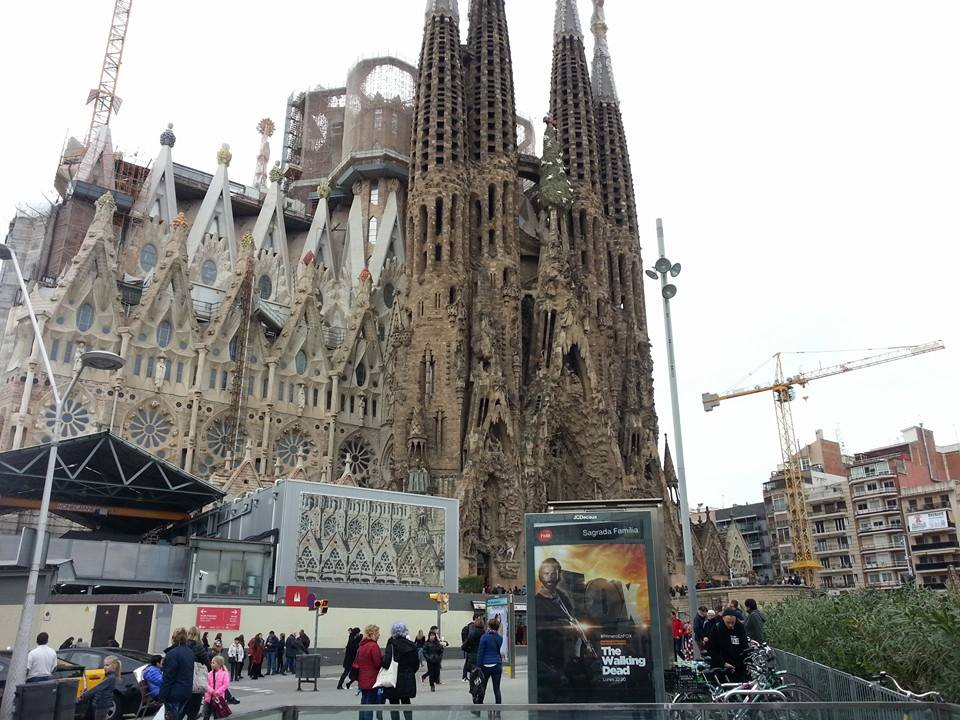

 and eventually found a chair. I had about fifteen minutes to enjoy the interior until my scheduled appointment to ascend the tower on the nativity side of the church. As I sat there, cold and basquing in the surreal green, orange, and red light, I reflected on the oddity that is the tourist trap sacred space. After all, as we moved along in our line outside I couldn’t help but relate the anxiety I felt about ‘getting in’ to the almost unbearable excitement I used to feel every time we drove into Disneyland. It was almost as if the church itself had become a novelty, a destination that just had to be checked off a list, but only after stepping through the doors.
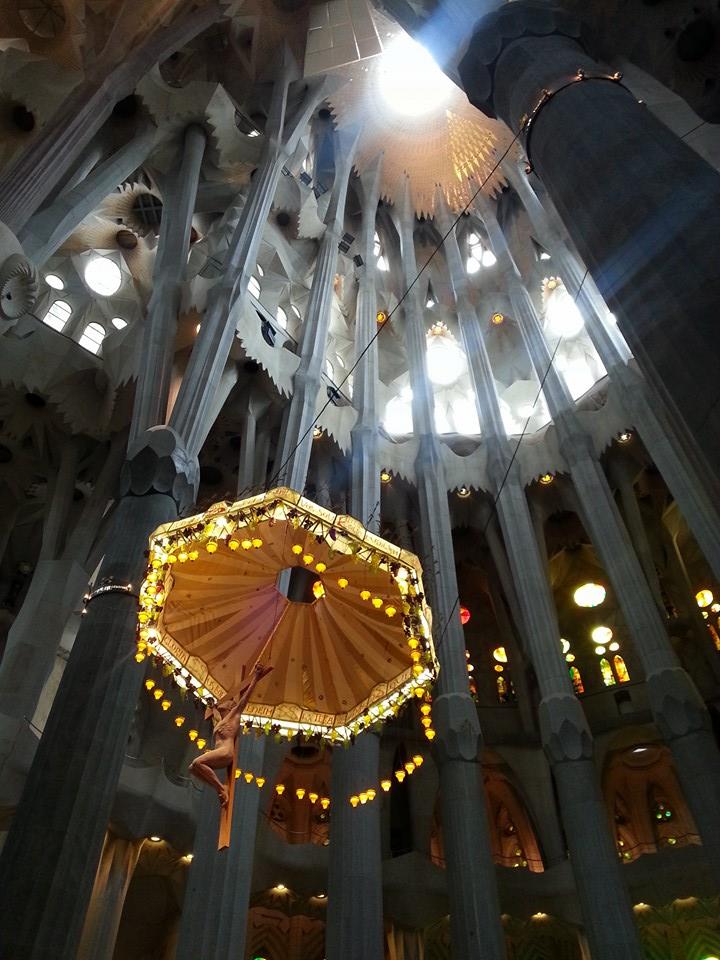 and the Bose surround sound speakers attached to the tree trunk columns were playing organ music. Yet, people were on their cell phones. They were talking loudly, and laughing. A young boy sitting a few chairs away was playing Angry Birds. Even I was reading Hemingway’s The Sun Also Rises. When I was in Madrid and stood in front of Picasso’s Guernica, the atmosphere seemed a bit more reverent. People spoke in hushed tones and politely obliged the no photography rule. It was as if they were standing before some sacred object. Or, perhaps it was nothing more than my misinterpretation of museum etiquette. Then, what about the etiquette of this church?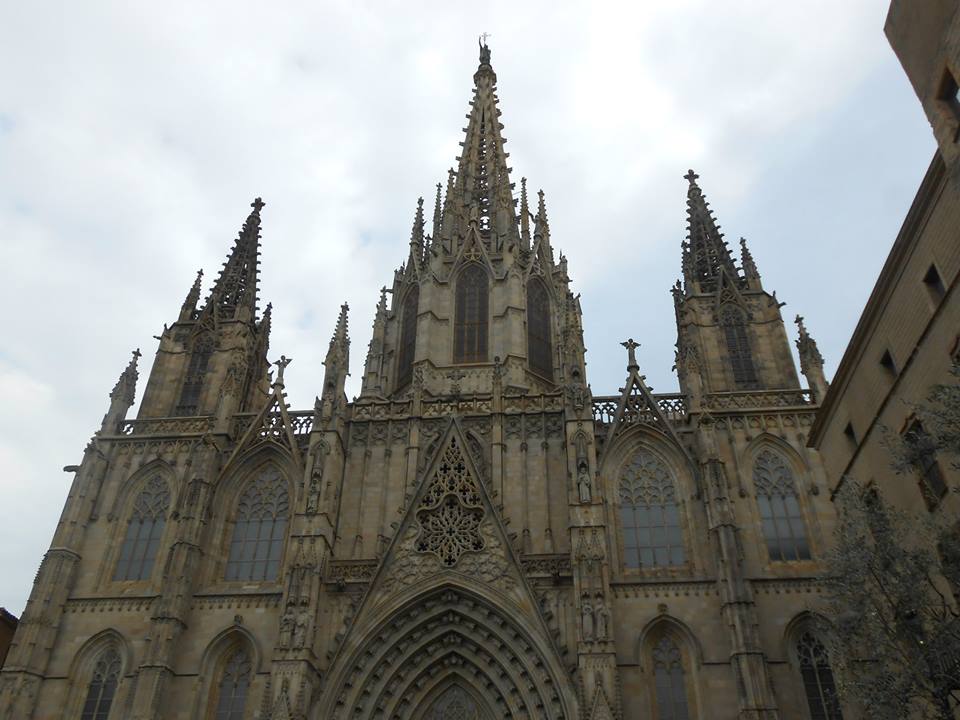

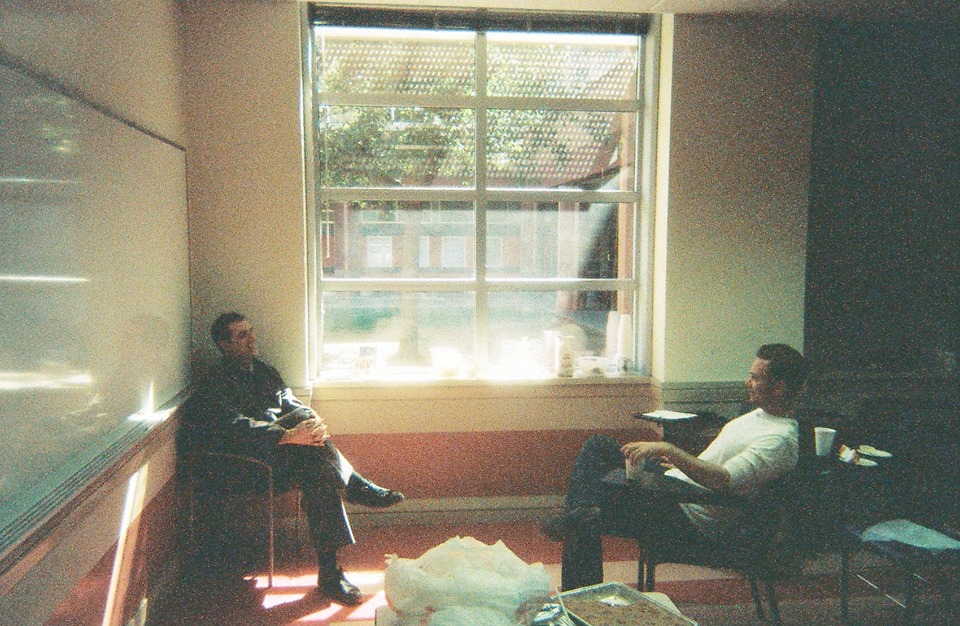
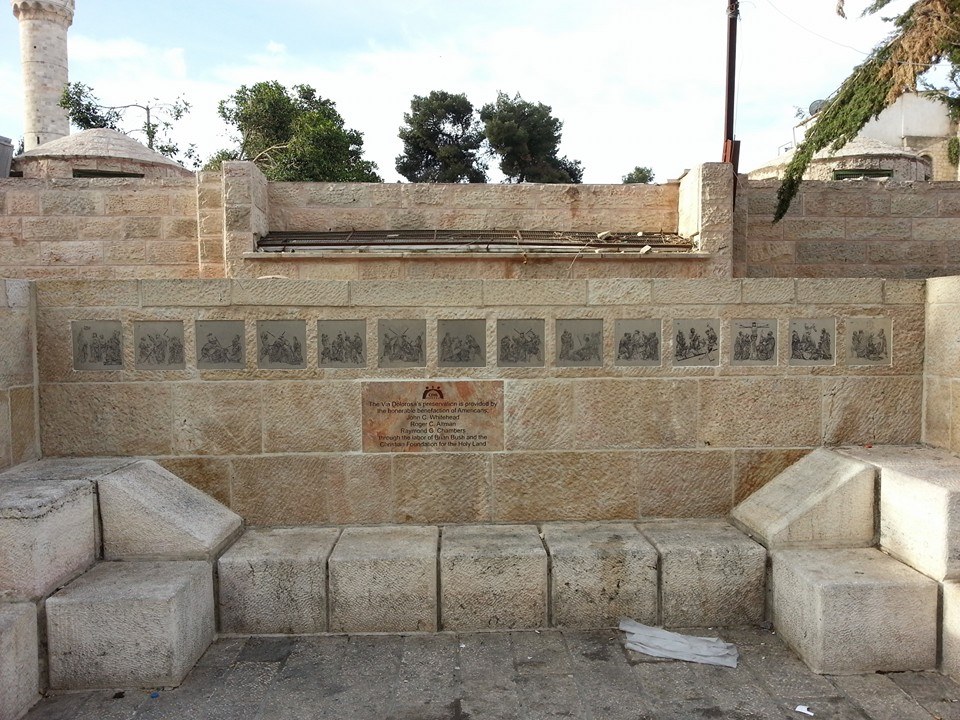



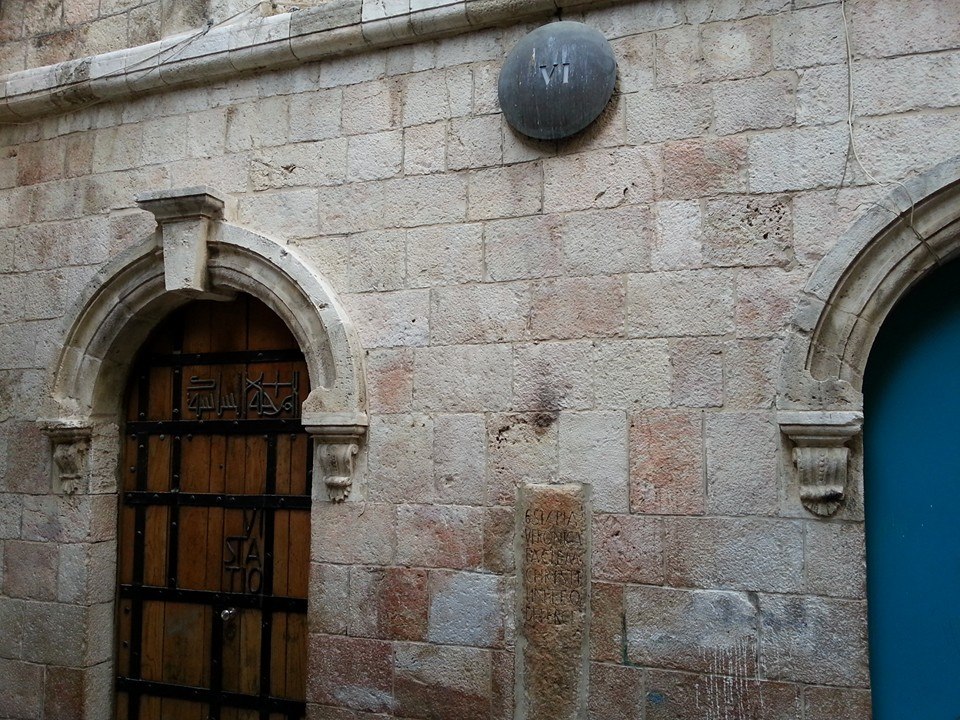


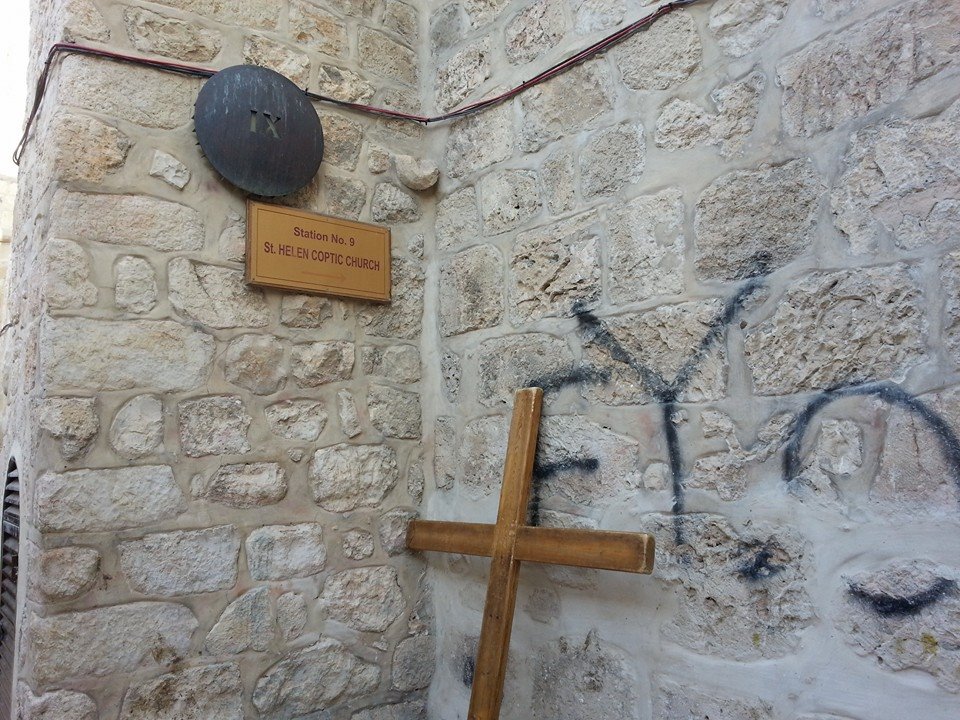


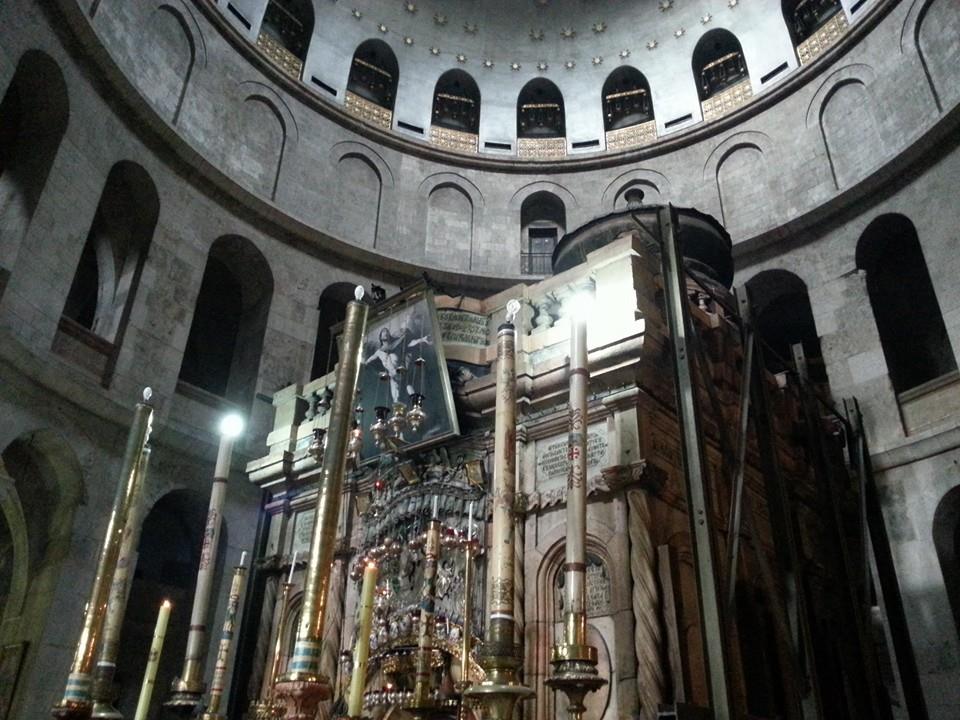
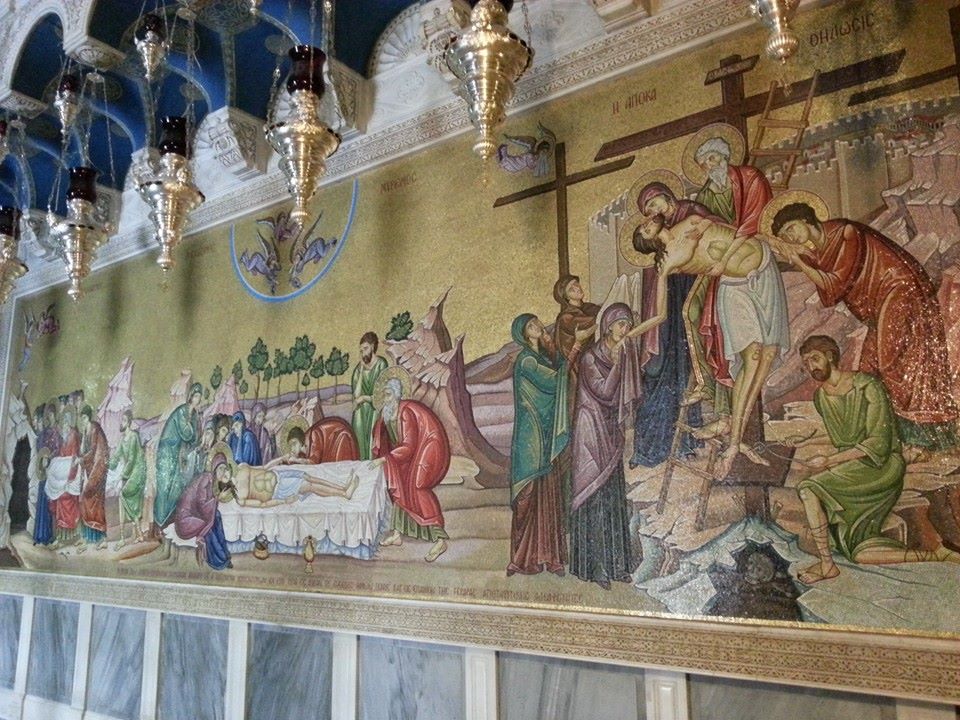
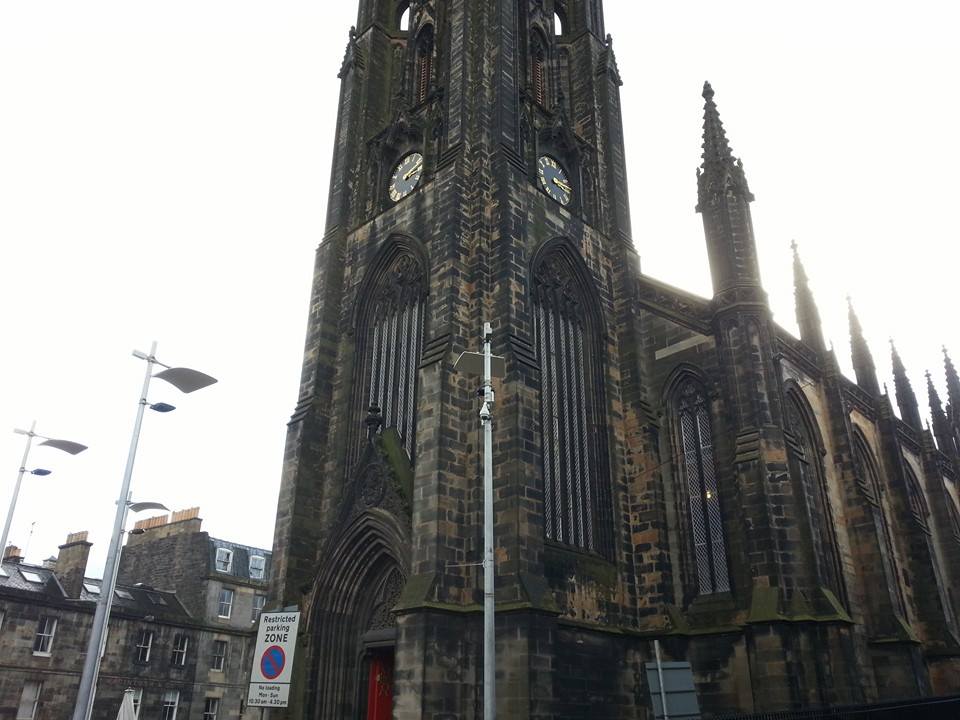

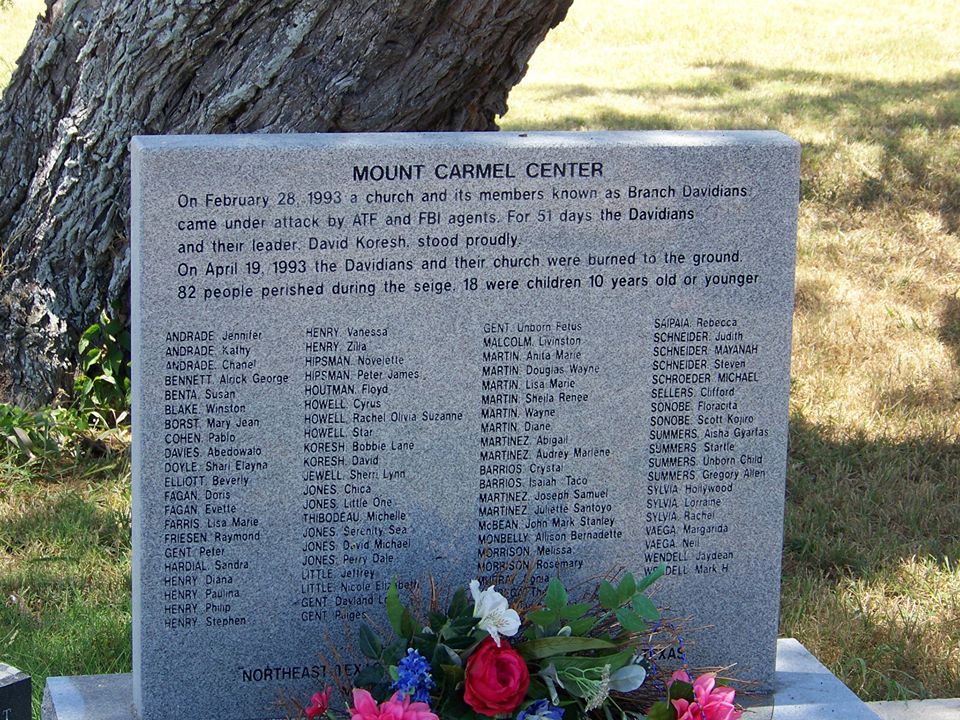

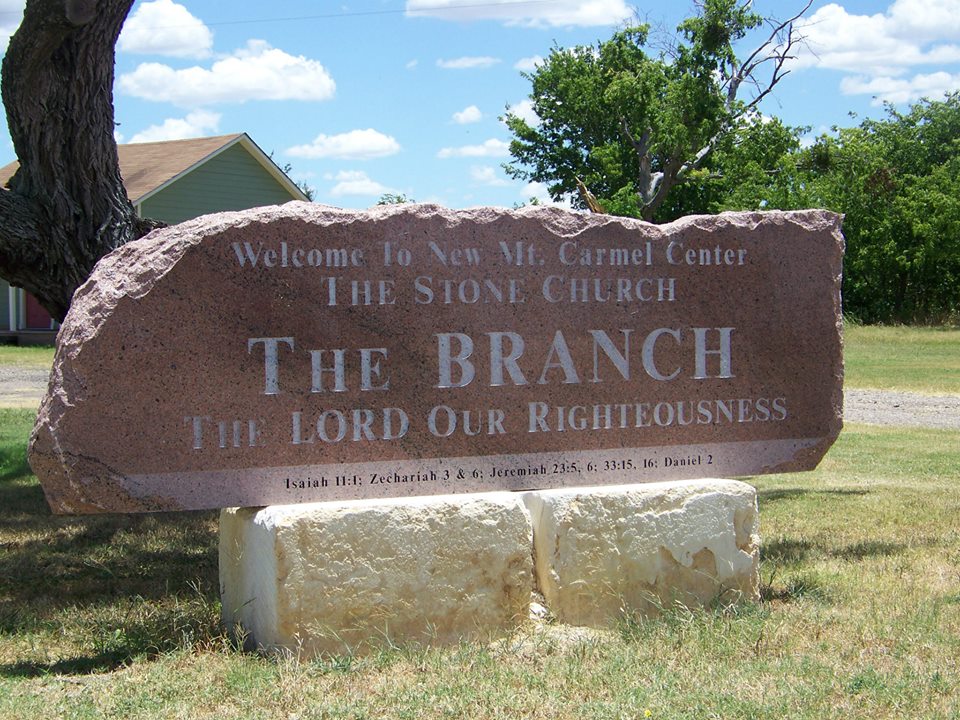




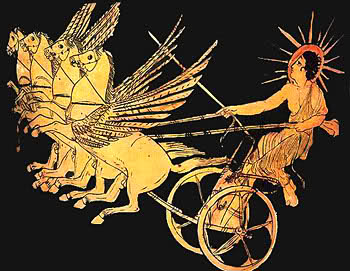


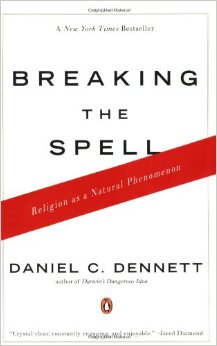

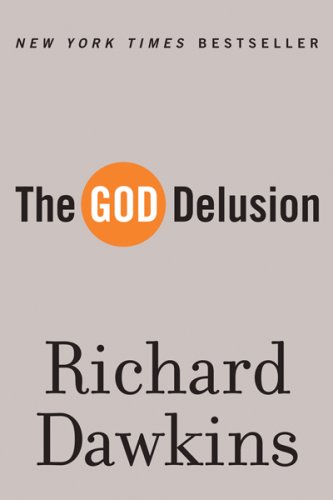

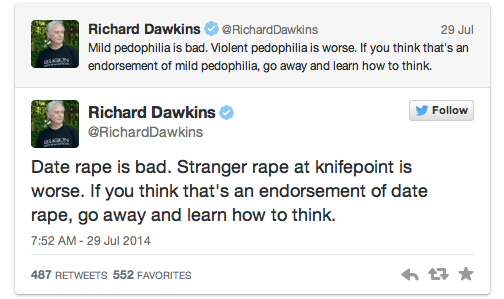


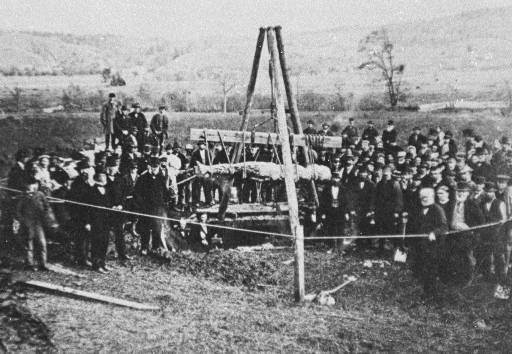

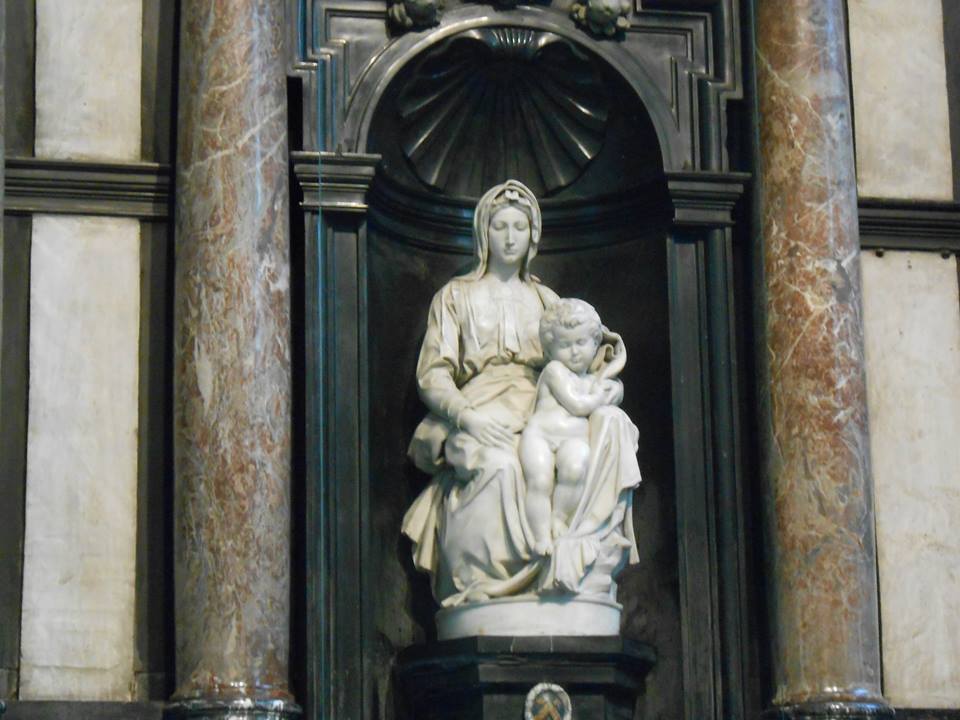
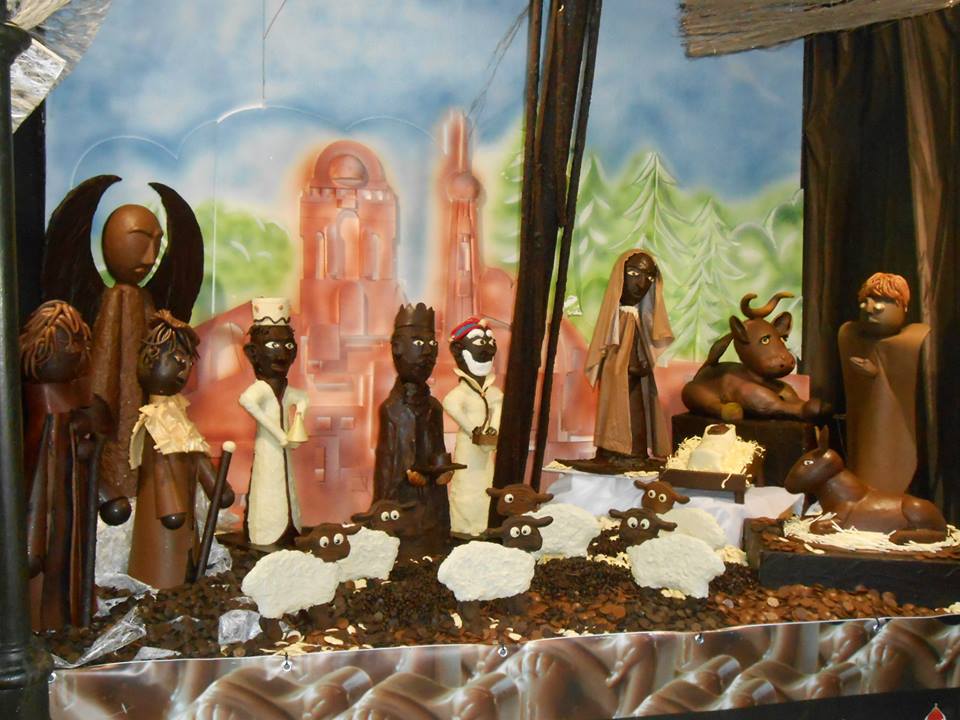
 everything is fiction


